Thinking about adding an accessory dwelling unit to your Costa Mesa property but unsure where to start? You are not alone. Many owners want rental income or space for family, yet the rules, costs, and timeline can feel confusing. This guide breaks down what California law allows, what Costa Mesa expects, realistic budgets, and the steps to take before you spend a dollar. By the end, you will have a clear, local plan you can act on. Let’s dive in.
What California ADU law guarantees
California Government Code Section 65852.2 sets baseline rules that every city, including Costa Mesa, must follow. The goal is to make ADUs feasible through objective, predictable standards.
- Junior ADU (JADU): Up to 500 square feet created from existing interior space in the main home.
- ADU sizes: Cities set limits, but many ordinances allow detached ADUs up to about 1,200 square feet. Attached sizes vary by city and lot.
- Setbacks: Side and rear setbacks for new detached ADUs can be as little as 4 feet. Conversions of existing space usually do not need new setbacks.
- Parking: Cities cannot require more than one parking space per ADU and must waive parking in many cases, such as when the ADU is within one half mile of public transit or created from existing space.
- Impact fees: For ADUs up to 750 square feet, impact fees are generally limited or waived. Larger ADUs pay fees proportional to their size.
- Owner occupancy: State law has limited local owner-occupancy requirements for newly created ADUs. Always confirm current local practice.
State law preempts barriers that block ADUs outright. Costa Mesa can apply objective local standards on design, height, and similar items, but those rules cannot make ADUs infeasible.
Costa Mesa rules to confirm before you design
Local codes evolve, so verify details with Costa Mesa’s Planning Division and Building & Safety Division before you finalize plans.
Zoning and eligibility
- Confirm that your lot’s zoning allows an ADU. Both single-family and multi-family zones often permit them.
- Check for overlays or special areas that add requirements, such as historic districts or specific plans.
- Review HOA or CC&R rules. Private covenants can restrict ADUs or rentals even when the city allows them.
Size limits
- Ask the Planning Division about maximum sizes for detached, attached, and junior ADUs on your parcel.
- Clarify whether Costa Mesa uses a flat square-foot cap or a formula tied to lot size or floor area.
Setbacks and height
- Confirm front, side, and rear setbacks. Ask when the 4-foot side and rear setbacks apply.
- Verify height limits for detached ADUs and whether a second story over a garage is allowed.
Lot coverage and FAR
- Ask how the city counts ADUs toward lot coverage and floor area ratio. This can affect maximum size and placement.
Parking requirements
- Request the current parking standard and exemptions. Ask about tandem parking, uncovered spaces, and on-street permit zones.
- Confirm whether your proximity to transit qualifies you for a parking waiver.
Utilities and potential upgrades
- Discuss electrical capacity, water, and sewer needs with the city and your utility providers. Panel, meter, and lateral upgrades can impact cost and timeline.
- Ask about any connection or capacity charges for water and sewer.
Fire and life-safety
- Check whether residential fire sprinklers are required for your specific project type and size.
- Confirm setbacks from property lines and any access or clearance rules.
Permits and process
- Expect ministerial approval using objective standards, but plan for plan check and inspections.
- Ask about current review timelines and typical correction rounds for ADUs in Costa Mesa.
Fees and impact fees
- Request estimates for plan check fees, permit fees, impact fees, and utility connection charges.
- Remember that ADUs up to 750 square feet are generally limited or exempt from impact fees under state rules.
ADU costs in Costa Mesa: realistic ranges
Construction costs vary by design, site conditions, utilities, and finishes. Use these ballpark ranges for Orange County and get written bids from local contractors before you commit.
Common ADU types and budgets
- Garage conversion
- Typical range: 40,000 to 150,000 dollars.
- Why choose it: Usually the fastest and least expensive path with fewer footprint issues.
- Attached ADU (addition or attached unit)
- Typical range: 150,000 to 350,000 dollars.
- Why choose it: Good middle ground on cost and size with convenient access to main home utilities.
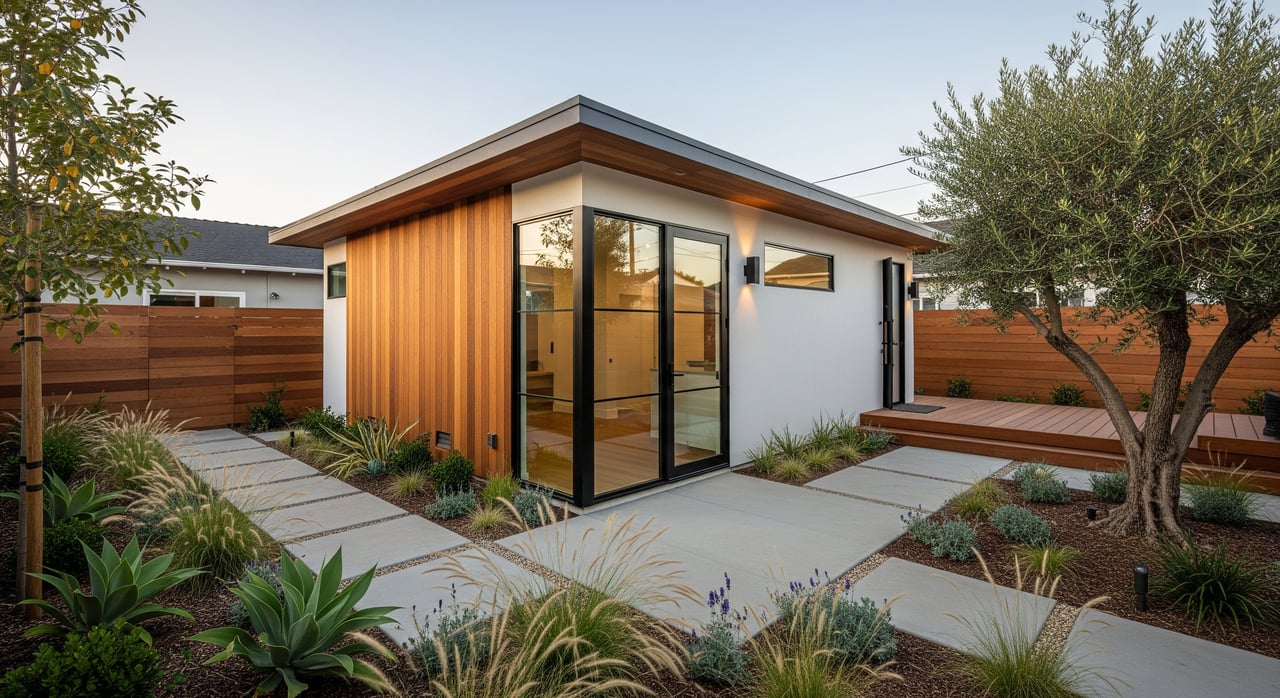
- Detached ADU (new stand-alone)
- Typical range: 150,000 to 500,000 dollars or more.
- Why choose it: Maximum privacy, flexibility, and rental appeal. Costs rise with size, structure, and finishes.
- Junior ADU (interior conversion up to 500 sq ft)
- Typical range: 20,000 to 100,000 dollars.
- Why choose it: Lowest cost and fastest for households that can repurpose existing space.
Cost drivers to watch
- Size and scope: Bigger footprints and more complex designs raise costs.
- Site constraints: Grading, tree protection, easements, or long utility runs add time and money.
- Structural and foundation work: New foundations and two-story structures cost more.
- Utilities: Electrical service upgrades and new sewer or water connections can be significant line items.
- Fire safety: Sprinklers or additional life-safety requirements may be triggered by size or design.
- Soft costs: Architecture, engineering, plan check, and permit fees.
- Interior choices: Kitchens, baths, HVAC, and finish quality drive per-square-foot costs.
- Labor market: Southern California labor rates are higher than the national average.
Timeline: from idea to keys
Actual timing depends on project complexity, plan quality, and contractor scheduling. Plan conservatively and build in contingencies.
- Pre-application and design: 2 to 8 weeks to scope your site, draft a concept, and gather utility info.
- Plan development: 4 to 10 weeks for architectural drawings and engineering.
- Plan check and permits: A few weeks to a few months, depending on completeness and revisions.
- Construction: 2 to 4 months for small conversions and 4 to 8 months or more for detached units.
- Inspections and final: 1 to 3 weeks to wrap up corrections and obtain final occupancy.
Simple garage conversions can be finished in 3 to 6 months. New detached units commonly take 6 to 12 months or longer.
Financing paths owners use
If you plan to borrow, speak with lenders early so your budget and design stay aligned.
- Cash or savings: Fastest and simplest if available.
- HELOC or second mortgage: Taps existing equity with flexible draws during construction.
- Construction loan to permanent: Funds the build, then converts to a regular mortgage.
- FHA Title I or renovation loans: Explore eligibility and property requirements with your lender.
- Local or state programs: Periodic incentives, loans, or technical assistance may be available.
Rentability and value in Costa Mesa
Orange County’s job base, coastal access, and regional universities support steady rental demand. In many neighborhoods, a well-designed 1-bedroom or studio ADU can attract small households, young professionals, and downsizers.
- Income and cash flow: Build a conservative pro forma. Include realistic rent, a vacancy allowance, maintenance reserves, insurance, property taxes, and financing costs.
- Value at sale: Permitted ADUs with a functional layout and rental history often command a premium. Conversion of costs to sales price is not one to one, so focus on design quality, permits, and documentation.
- Short-term rentals: Check Costa Mesa’s rules before planning any short-term rental use. HOA or CC&R rules may also apply.
- Taxes and insurance: Notify your insurer. Rental income is taxable. Consult a tax advisor about depreciation, deductions, and whether improvements trigger reassessment.
- Landlord-tenant rules: Follow California rental regulations and any local protections or just-cause requirements.
Quick feasibility checklist
Use this fast pass before you hire a designer or contractor.
- Zoning and overlays: Confirm ADU eligibility for your parcel with Costa Mesa Planning.
- HOA or CC&Rs: Identify any private restrictions on ADUs or rentals.
- Site layout: Mark existing structures, yard depth, potential ADU footprint, and setbacks.
- ADU type and size: Choose JADU, garage conversion, attached, or detached, and target square footage.
- Utilities: Check electrical panel size, sewer and water locations, and likely upgrade needs.
- Parking: Ask about required spaces, tandem options, and transit-based exemptions.
- Fire and life-safety: Confirm sprinkler triggers and clearance requirements.
- Fees: Request ballpark amounts for plan check, permits, impact fees, and utility connections.
- Bids: Collect at least two to three contractor estimates with line-item budgets and contingencies.
- Rent and management: Validate market rent for similar units and plan for professional management if needed.
Smart next steps in Costa Mesa
- Book a quick call with the Planning Division or visit the permit counter to confirm size, setback, and parking standards for your lot.
- Sketch a preliminary site plan showing the main home, the proposed ADU location, utilities, and access.
- Decide on your goal: long-term rental, multigenerational living, or value boost before selling.
- Get written bids and a timeline from two to three local contractors. Ask about utility upgrades and soft costs.
- Build a simple pro forma with conservative rent, a vacancy cushion, and ongoing expenses.
If you want help weighing an ADU as part of your broader real estate strategy, from value impact to sell-or-hold scenarios, connect with the Tina Tan Group. Our team brings local market intelligence and concierge-level guidance so you can move forward with confidence. Request Your Home Valuation.
FAQs
What does California law allow for ADUs in Costa Mesa?
- California’s ADU law sets baseline rules that Costa Mesa must follow, including ministerial approval, small setbacks, capped parking, and impact fee limits for units up to 750 square feet.
How big can my Costa Mesa ADU be?
- Maximum sizes depend on your lot and Costa Mesa’s ordinance. Many cities allow detached units up to about 1,200 square feet, with attached and junior ADUs sized differently. Confirm exact limits with Planning.
Do I need parking for a Costa Mesa ADU?
- Often only one space per ADU is required, and many projects qualify for a parking waiver, such as when the property is near transit or the ADU converts existing space. Verify your parcel’s specifics with the city.
What are realistic ADU costs in Orange County?
- Garage conversions often run 40,000 to 150,000 dollars, attached ADUs about 150,000 to 350,000 dollars, detached ADUs 150,000 to 500,000 dollars or more, and JADUs 20,000 to 100,000 dollars.
How long does an ADU take in Costa Mesa?
- Simple conversions can finish in 3 to 6 months. Detached ADUs commonly take 6 to 12 months or longer from design through final inspections.
Will an ADU increase my property value?
- Permitted ADUs with functional layouts and rental history typically add value, but the increase is not strictly equal to construction cost. Market demand and design quality matter.
Can I use a Costa Mesa ADU as a short-term rental?
- Short-term rental rules vary and can change. Check Costa Mesa’s municipal code and any HOA or CC&R restrictions before planning short stays.
What financing options can I use for an ADU?
- Owners often use cash, a HELOC, construction-to-permanent loans, or renovation loans. Speak with lenders early to align budget and design.