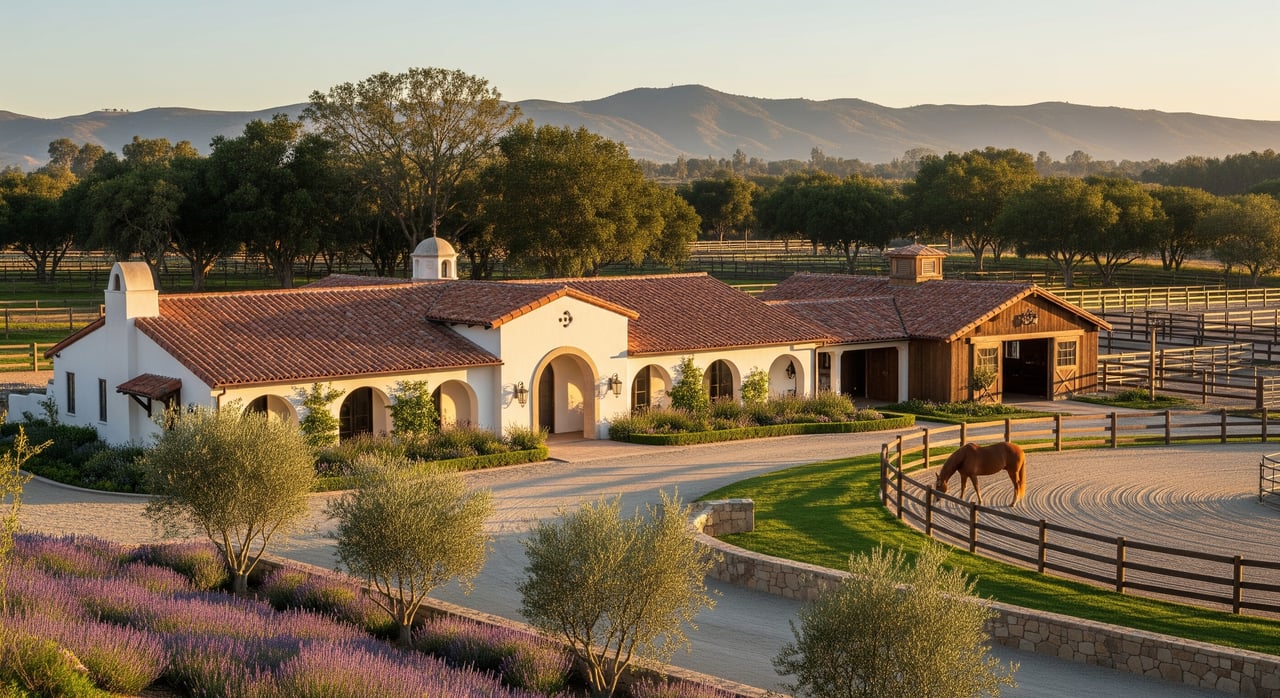
Dreaming of riding out from your own backyard? In San Juan Capistrano, you can pair Orange County living with real horse facilities, bridle paths, and nearby open space. Buying the right equestrian property takes a different checklist than a typical home. In this 101 guide, you’ll learn how to evaluate barns, arenas, trailer access, utilities, zoning, and trail connections so you can buy with confidence. Let’s dive in.
Why San Juan Capistrano appeals
San Juan Capistrano sits where coastal plains meet the foothills, with the San Juan Creek watershed shaping both scenery and site conditions. The Mediterranean climate brings cool, wet winters and hot, dry summers, which influences pasture growth, irrigation needs, dust control, and fire risk. Many local properties are small ranch parcels focused on lifestyle. Nearby multi-use parks and trail networks add riding options beyond your own arena.
Zoning and rules to check first
Before you fall in love with a barn, confirm that the property can legally support your plans. Review the City of San Juan Capistrano municipal code and zoning for animal-keeping rules, setbacks, and accessory structure limits. Some parcels may also interact with County of Orange rules, especially if near unincorporated areas. Request CC&Rs early if a homeowners association exists, and check for environmental overlays like flood zones, creek setbacks, or conservation easements that can limit arena placement or new structures.
Barn essentials to expect
A safe, functional barn protects your horses and your investment. Focus on:
- Stall dimensions: 12'x12' or larger is preferred for most horses and future resale. Many private barns include 10'x10' to 12'x12' stalls.
- Ventilation and light: cross ventilation, ridge vents, cupolas, and windows help reduce heat stress and respiratory issues in warm months.
- Flooring and drainage: rubber-matted concrete or compacted base with proper slope helps control moisture and ammonia.
- Smart layout: a wash rack with non-slip surface and proper drainage, a ventilated hay storage area separate from stalls, and secure, rodent-resistant feed and tack storage.
- Utilities: GFCI-protected electrical circuits, adequate lighting, and hot-cold water at the wash rack.
Arena, turnout, and footing
Match arena size and footing to how you ride.
- Size: small private arenas often run 40'x80' to 50'x100'. Many owners prefer 60'x120' to 80'x150'. Competitive disciplines often need over 100'x200'.
- Footing: sand blends with fiber, rubber, or geotextiles are common. A well-constructed base with good sub-drainage reduces injuries and maintenance.
- Drainage: seasonal rains can saturate arenas without proper crown and perimeter drains. Plan for quick runoff to avoid erosion.
- Turnout: given low rainfall and native forage, most properties cannot support pasture-only feeding. Expect to supplement with hay and stored feed.
Fencing, gates, and trailer access
Your fencing and driveway should be horse-safe and trailer-friendly.
- Fencing: board, pipe, vinyl rail, or high-tensile are common. Aim for 4.5 to 5 feet in height, with a continuous top rail and no sharp protrusions.
- Gates: plan for a trailer-friendly width around 12 feet with reliable latches.
- Driveway geometry: confirm turning radius, overhead clearances, and load-bearing surfaces. Private bridges, culverts, or steep drives can limit large trailers.
Water, septic, and soils
Water reliability is critical in Southern California. Confirm whether the property uses a city meter or a permitted well, and assess storage capacity for stock and irrigation. Barns without sewer typically rely on septic, so verify system records and capacity, especially if you plan to add water fixtures. Soil type affects arena performance, drainage, grading costs, and septic function. For major projects, a soils or geotechnical consultation is wise. Consider shade from mature trees and built shelters, and remember that protected trees may have removal limits.
Fire safety and evacuation
Foothill areas are wildfire-prone. Review local fire authority guidance on defensible space, access for emergency vehicles, and structure hardening. A practical plan includes wide gates, clear driveways, and an on-site trailer strategy for large-animal evacuation. Some insurers may require specific mitigation measures.
Trail access and riding nearby
San Juan Capistrano offers access to regional trail systems and local bridle paths. O’Neill Regional Park provides designated equestrian routes. Portions of Rancho Mission Viejo and other open-space preserves also include multi-use trails, though access varies by management plan. Not every trailhead has trailer parking, so verify the closest legal parking and seasonal rules before you haul.
Costs to budget for
Owning a horse property involves both ongoing and periodic costs. Build a plan for:
- Ongoing horse care: hay and feed, farrier, vet care, vaccinations, and deworming. Drought years can influence hay availability and pricing.
- Facility upkeep: footing replenishment and dragging, fence repairs, barn electrical and roofing maintenance, and driveway care.
- Utilities: irrigation and stock water can raise bills, and wells need periodic maintenance.
- Insurance: confirm homeowner policy endorsements, and explore equine liability or umbrella coverage. Boarding operations require separate commercial policies.
Buyer due diligence checklist
Use this list to structure your offer and inspections:
- Title and access: recorded road access and trailer-suitable easements, plus any road maintenance agreements.
- Zoning and CC&Rs: allowed animal counts, setbacks, and accessory structure rules; request CC&Rs early.
- Permits: verify permits for existing barns, arenas, electrical, and plumbing.
- Barn and arena condition: framing and roof integrity, ventilation, wash rack drainage, footing base and dust control, GFCI use, and hay storage separation.
- Fencing and gates: absence of hazards, secure hinges and latches, and trailer-width gates.
- Water system: source, quality testing, well yield docs if applicable, and storage tank condition.
- Septic: pump records, permits, tank condition, and percolation capacity if you plan expansions.
- Soils and grading: erosion risk, slope stability, and suitable arena locations away from drainage lines.
- Environmental constraints: flood zone status, creek setback requirements, and potential biological or archaeological sensitivities.
- Professional inspections: structural, electrical, and plumbing. Engage a geotechnical or soils expert for new or upgraded arenas.
Red flags to pause on
- No documented permits for existing barns or arenas.
- Narrow private roads, bridge weight limits, or tight curves that block trailer access.
- Standing water or seasonal flooding near stalls or arenas.
- Insufficient water supply or documented restrictions.
- Dense, unmanaged vegetation around structures with no wildfire mitigation history.
How Tina Tan Group helps
Buying an equestrian home is part lifestyle, part logistics. You need clear guidance on zoning, permits, trailer access, and the true condition of barns and arenas. As local Orange County specialists with a boutique, high-touch approach, we help you prioritize the right properties, coordinate due diligence with the city and county, and introduce proven local pros, from equine vets and farriers to contractors and soils engineers. Through our Christie’s International Real Estate Southern California affiliation, we also surface quality opportunities and manage a smooth, concierge-style purchase experience.
Ready to tour equestrian properties in San Juan Capistrano? Reach out to the Tina Tan Group to get started.
FAQs
What zoning allows horses in San Juan Capistrano?
- Check the City of San Juan Capistrano zoning for animal-keeping rules, setbacks, and accessory structure sizes, and request any applicable CC&Rs early.
What arena size works for most private riders?
- Many private riders are well served by 60'x120' to 80'x150', while small practice spaces can be 40'x80' and competition-focused disciplines often exceed 100'x200'.
Do you need a well for horses in SJC?
- Many owners use municipal water; if a property has or needs a well, confirm permits, test water quality and yield, and assess storage capacity for stock and irrigation.
How does wildfire risk affect equestrian homes?
- Wildfire-prone foothills make defensible space, structure hardening, emergency vehicle access, and a large-animal evacuation plan essential for safety and insurance.
Where can you ride near San Juan Capistrano?
- Riders often use regional parks like O’Neill Regional Park and selected multi-use trails in nearby open-space areas, but access and trailer parking vary by agency.
What inspections are unique to horse properties?
- In addition to home inspections, review barn permits and electrical safety, arena base and drainage, fencing, water source and storage, septic capacity, and soils conditions.